Rh Disease Statistics Affected Babies With No Rhogam Shot
Past Joe Neighbor
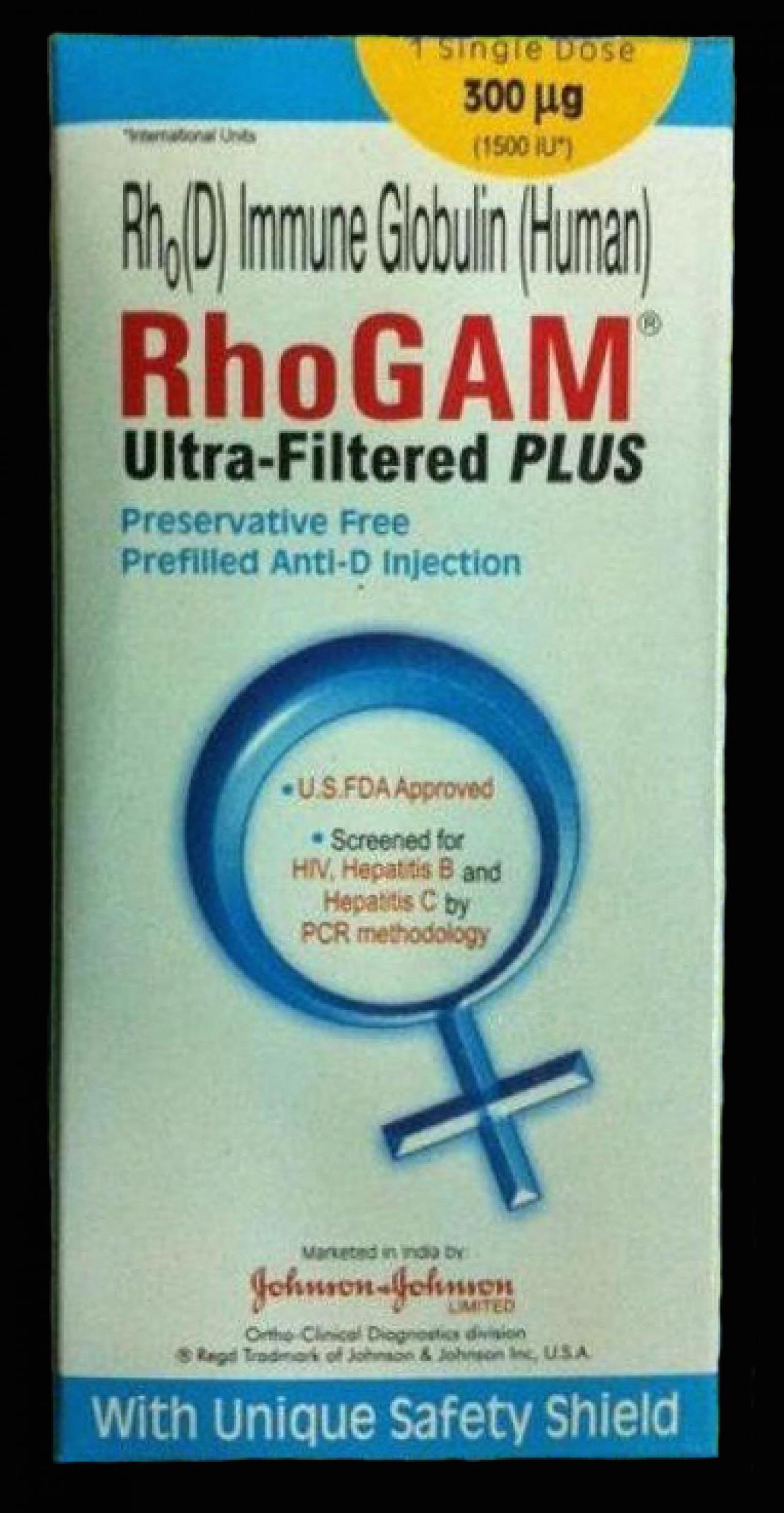
You lot'd be forgiven for having never heard of Rh disease. The affliction has substantially been eradicated in high-income countries. Only for centuries until the late 1960s, the disease was one of the most severe and devastating weather condition for newborns. In the U.s., it killed approximately 10,000 newborns a twelvemonth and caused encephalon damage in many more than.
Although the factors that cause Rh affliction are still present, the disease is about completely prevented by RhoGAM, a vaccine developed in the 1960s by physicians at Columbia Academy Vagelos College of Physicians and Surgeons and nonetheless used today. On Feb. 5, Columbia researchers and physicians, forth with guests from around the world, gathered at VP&Due south to celebrate RhoGAM's 50th ceremony.
"I still curiosity at how a low-tech solution could have such impact," said John Gorman, MD, former director of the blood bank at NewYork-Presbyterian/Columbia University Irving Medical Heart and co-creator of RhoGAM, to the audience gathered for a panel give-and-take to celebrate his vaccine. "It'south the most cost-constructive drug ever produced. At that place have been no fatalities in 50 years, and information technology saves $one billion every year by preventing high-risk Rh pregnancies. Plus, in that location's peace of mind for Rh-negative mothers. How lucky can you be?"
Rh disease poses adventure to many pregnancies
Rh disease can develop when a woman with Rh-negative blood is pregnant with an Rh-positive fetus. In these cases, when fetal red claret cells cross into the mother'southward circulation—usually at commitment—the mother's trunk begins producing antibodies that tin attack and kill a fetus' carmine blood cells. It takes some fourth dimension to produce such antibodies, so the kickoff Rh-positive child is typically spared. But each subsequent Rh-positive fetus increases the odds the female parent volition go "sensitized" to the fetus.
Once a woman is sensitized, her antibodies can cross the placenta to destroy the blood-red blood cells of her fetus, which can lead to miscarriage, brain harm, or the newborn's decease. Roughly 15 percent of American women have Rh-negative blood, so the problem facing obstetrics and gynecology is immense.
Gorman set up out to cure Rh disease together with a Columbia obstetrician, Vincent Freda, MD, and William Pollack, PhD, chief research scientist at the Ortho Pharmaceuticals lab. Two physicians based in Liverpool, England, Cyril Clarke, MD, and Ronald Finn, Md, were independently pursuing the aforementioned goal. In addition, Alvin Zipursky, MD, a Toronto-based pediatrician, who was working in Winnipeg at that time, was studying the extent of the transfer of fetal red blood cells into the maternal circulation throughout pregnancy and at parturition.

Past the early on '60s, when the researchers started their piece of work, much of the scientific foundation for such a treatment had already been laid. It was known, for example, that Rh disease would non occur if the Rh-negative mothers did not develop the antibodies. Information technology was too understood that injecting someone with antibodies made by other people against a given antigen prevented the recipient from producing her ain antibodies against that antigen.
That suggested to Gorman and Freda that administering anti-Rh antibodies to an Rh-negative mother shortly after delivery would prevent sensitization to the Rh antigen and subsequent Rh disease. Technically, the breakthrough made by Gorman and his colleagues had been possible since 1941, when Philip Levine discovered the cause of Rh affliction. It merely did non occur to anyone to put it all together.
Fighting Rh disease and skeptics
"Vince Freda and Beak Pollack grasped this triple conjunction immediately," Gorman said. "And they had the will and the resource to practice something about it. They turned this thought into reality, doggedly overcoming difficulties, withstanding the firsthand pushback, doubtfulness, and skepticism of virtually the whole blood bank community."
Perhaps the skeptics had a indicate: Rh allowed globulin (RhIg)—the anti-Rh antibiotic in the RhoGAM vaccine —is paradoxically the same agent that causes Rh illness and can kill babies in the womb. And stranger yet: The more than "dangerous" the antibody, the more effectively it prevents sensitization.
"Just there information technology was: RhIg, a fully optimized molecule, in plentiful supply from the legions of Rh mothers already Rh-sensitized," said Gorman. "No need for clever chemists to synthesize, fine-melody, and exam a novel molecule, equally is the case with most new drugs."
In the mid-60s, Gorman and Freda obtained anti-Rh antibodies from Pollack and showed that they prevented sensitization in Rh-positive subjects. This helped pave the way for RhoGAM'due south official regulatory blessing in the United States in 1968.
The benefits were firsthand. The starting time person to receive the approved drug received the injection mere hours after it became available. Her name is Marianne Cummins, and she, her husband, and her md, David Landers, MD, were likewise present in February to tell her story.
In 1968, Cummins was 29 and meaning with her third Rh-positive kid but had not nevertheless become sensitized. RhoGAM prevents sensitization altogether—equally long every bit it's administered within 72 hours after delivery. She had read in the paper about the new treatment, which was to be released on June one. However, her due date was May 27. If she delivered on fourth dimension, she would miss the chance to utilize the drug past one mean solar day.
Coincidentally, Cummins' husband had connections at Johnson & Johnson, the owner of Ortho Diagnostics, which produced the vaccine. He leaned on those friends, who in plow lobbied the Division of Biologics Standards (the precursor of the FDA), which then approved this type of new drug. Their efforts paid off: The release appointment was moved up to May 29 and on that day, at Holy Name Hospital in Teaneck, N.J., Cummins became the start person to receive RhoGAM. She would get on to take another child, but this time with a newfound peace of mind.
Rh disease is still a scourge
Within a year of RhoGAM'south debut, nearly every meaning Rh-negative woman in the United States, Canada, and most of Europe received the drug, saving the lives of millions of Rh-positive babies. For their piece of work, Gorman, Freda, Pollack, Finn, and Clarke received the Lasker Award in 1980.
Nonetheless, Rh disease is all the same a scourge in many other parts of the world.
"I was very happy that Rh disease was eliminated [hither], every bit were all my colleagues," Zipursky said at the VP&S give-and-take. "But virtually 10 years ago, I suddenly realized that maybe Rh illness is not gone."

It is one matter to invent a cure; getting that cure into the easily of mothers in poor countries is another challenge.
To that end, Zipurksy and Vinod Bhutani, Physician, a neonatologist from Stanford Academy, founded CURhE, the Consortium for Universal Rh Disease Elimination. This organization seeks to extinguish Rh disease worldwide by increasing admission to and affordability of RhIg. They are joined in this endeavor by other groups who sent representatives to the VP&S console discussion: Funmi Banire, founder of a Nigeria-based non-governmental organization, Rhesus Solution Initiative, and Gerard Visser, Medico, PhD, a Dutch obstetrician and fellow member of the International Federation of Gynecology and Obstetrics (FIGO).
"I thought the problem of Rh disease was over," Visser said, "until CURhE showed it still exists in half the world. Iii hundred g children dying or being handicapped every year is just too many. Nosotros know preventative measures are always preferable. It'south then easy. Why aren't we capable of doing the easy affair?"
RhoGAM is now produced by Kedrion Biopharma, which co-sponsored the 50th anniversary event with the Vagelos College of Physicians & Surgeons.
Source: https://www.cuimc.columbia.edu/news/rhogam-50-columbia-drug-still-saving-lives-newborns
0 Response to "Rh Disease Statistics Affected Babies With No Rhogam Shot"
Отправить комментарий